
The FlexPOS template from Smartstore stands for performance, event, and retail management as well as for a modular system architecture
Why modern cash register systems need to do more than just handle transactions
With the increasing convergence of retail, events, and digital interaction, the requirements for cash register systems have fundamentally changed. Registers are no longer isolated endpoints but integral components of complex process chains. Flexpos was designed specifically for this environment: as a standalone template for professional POS and self-checkout solutions in the retail and event sector.
POS-First: What modern sales systems really need to achieve
While classic shop systems are primarily optimized for content, catalogs, and conversions, different priorities apply in the POS environment.
Key factors include:
-
Response speed under load
-
Error tolerance with unstable connectivity
-
Intuitive operability without a learning curve
-
Scalability across multiple devices and roles
Flexpos consistently follows a POS-First approach. The user interface is not derived from a shop frontend but is designed from the ground up for real sales situations – both behind the counter and in self-service environments.
Flexpos vs. Flex Template: Architecture instead of adaptation
Conceptually, Flexpos is based on the Flex Template, but it is not merely a modification but an independent template with a clear objective.
The main difference lies in the orientation:
-
Flex focuses on presentation, content, and SEO
-
Flexpos focuses on processes, interaction, and throughput
While Flex is optimized for digital sales, Flexpos addresses physical sales situations where time, stability, and error minimization are critical.
Smart Retail POS
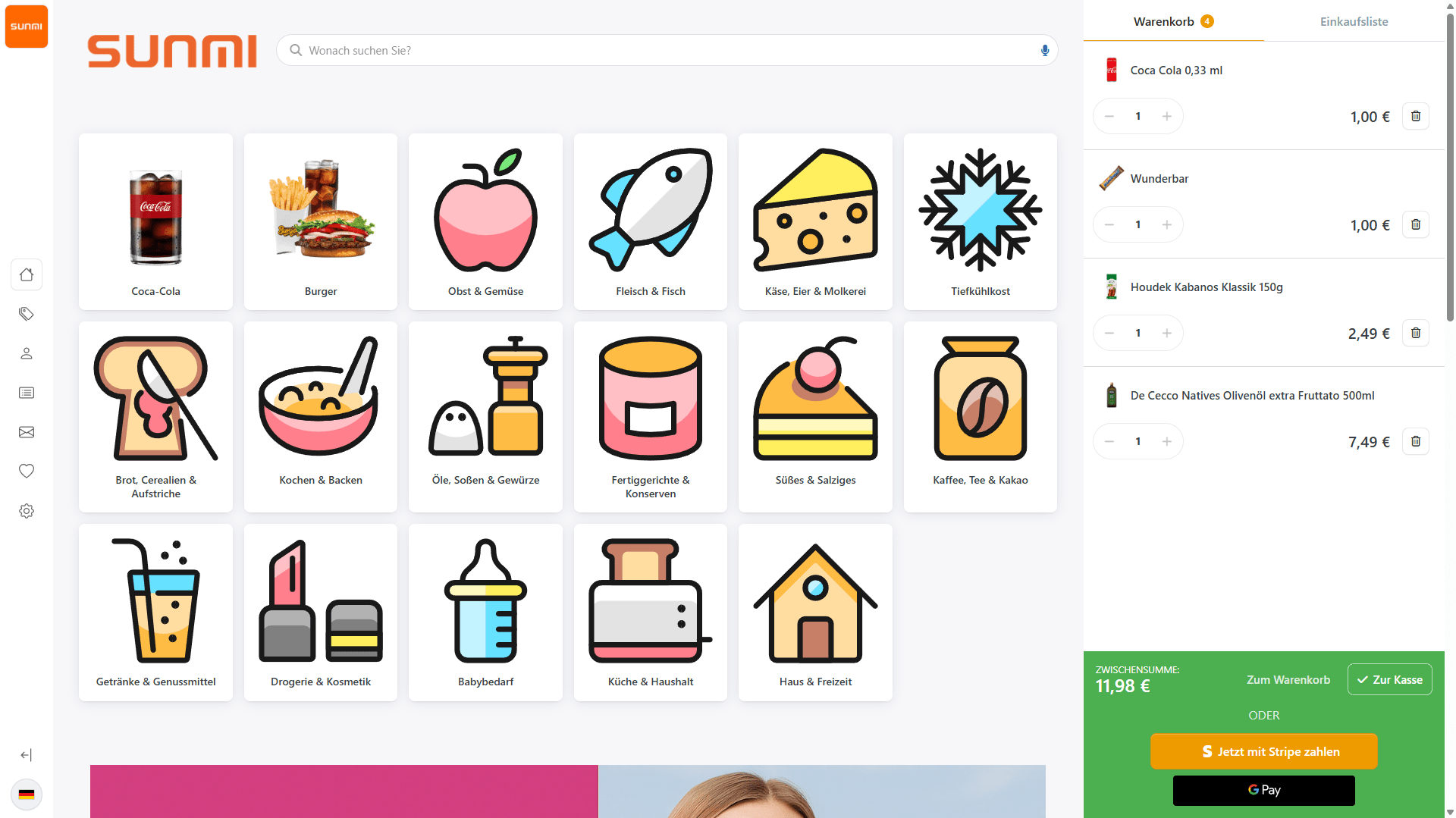
Smart Venue POS
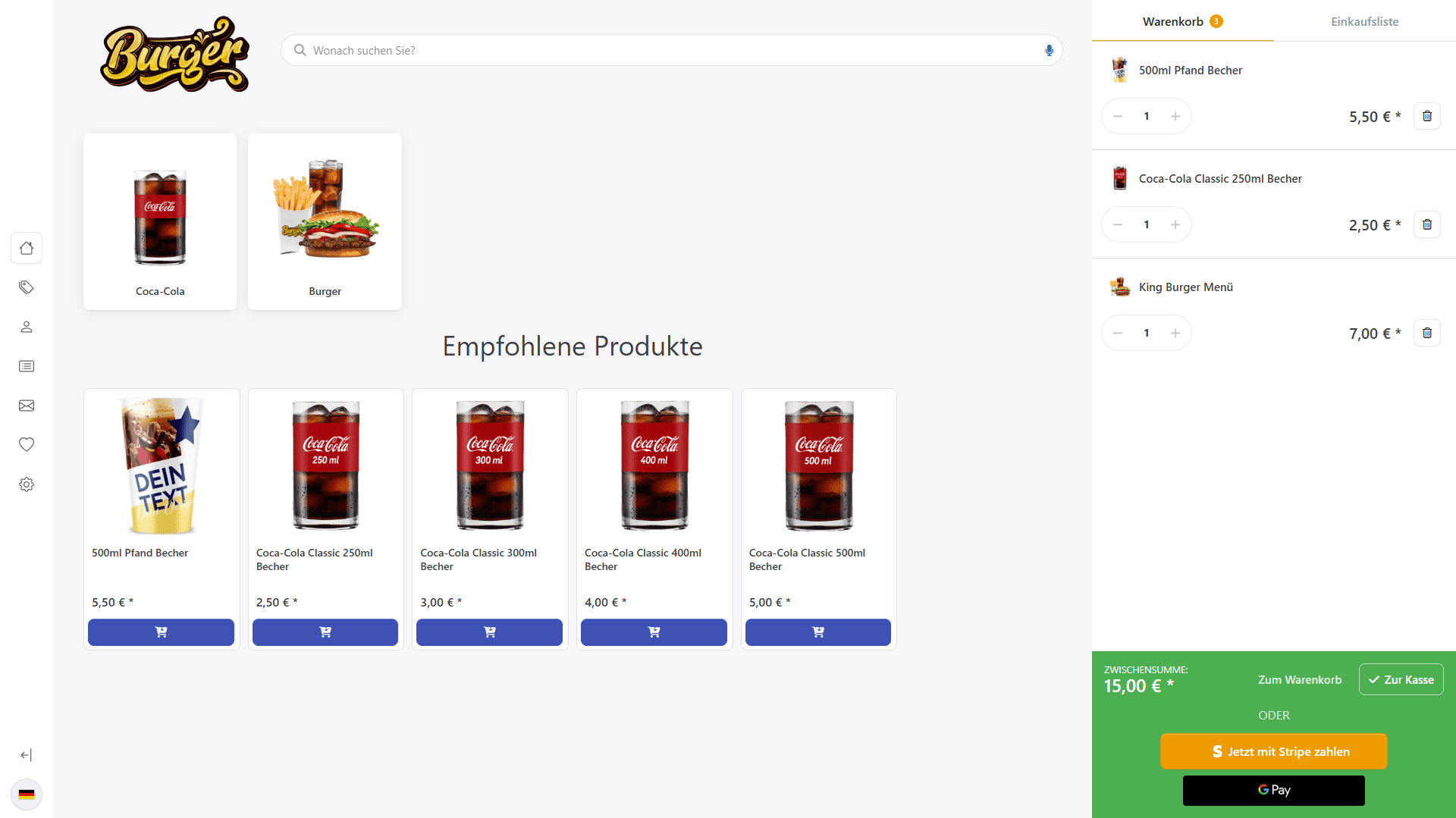
Event Flow, FlexPOS, and SoftPOS: Modular instead of monolithic
Flexpos unfolds its strength through the interplay of specialized modules that are systemically interconnected:
EventFLOW: Controls visitor, sales, and interaction flows in real-time. Particularly relevant for events where processes do not proceed linearly.
FlexPOS: The central POS module for classic cashier workplaces with high transaction volumes.
SoftPOS: Enables mobile sales scenarios directly on devices – without stationary cash register hardware.
This modular architecture allows for flexible deployment scenarios that can dynamically adapt to location, load, and target audience.
QR Code, RFID, and NFC: Interaction as a system component
Flexpos integrates QR Code, RFID, and NFC technologies not as optional extensions, but as architectural core components. This allows for:
-
Realizing cashless payment systems
-
Mapping access and permission concepts
-
Analyzing and controlling visitor flows
-
Consistently avoiding media disruptions
On this basis, Smart Venues as well as Smart Retail and POS systems are created, in which sales, access, identification, and billing are seamlessly integrated.
Wallet as a connecting system element
In the context of FlexPOS, the Smartstore Wallet & plays a central role. It functions not only as a means of payment but as a persistent identity and interaction layer across all touchpoints. Balances, permissions, tickets, coupons, and transaction histories are consolidated into a single system.
This is where the Flexpos approach unfolds its special dynamics for Smart Venues and Smart Retail. Through the seamless integration of wallet, POS, access systems, as well as QR, RFID, and NFC technologies, uninterrupted processes emerge without media breaks. Users seamlessly switch between entry, purchase, interaction, and billing – regardless of whether at the counter, mobile, or in self-service.
For operators, this means higher process security, better controllability, and new opportunities for personalization. The wallet, therefore, evolves from a mere payment instrument to a strategic platform component of a connected sales and usage system.
Performance in the POS environment: Stability beats benchmark
Unlike classic web templates, known performance scores are only partially meaningful in the POS environment. What matters are:
-
Stable response times under constant load
-
Consistent behavior during parallel transactions
-
Predictable UI reactions even with hardware limitations
Flexpos, therefore, relies on reduced, purpose-driven interfaces and a clearly prioritized rendering logic. Visible reaction takes precedence over complete asset loading.
Conclusion
Flexpos is not a shop template with a POS extension, but a dedicated cash register template for complex, real sales situations. The combination of a clear system architecture, modular POS components, integrated identification technology, and wallet logic creates a platform that goes far beyond traditional cash register software.
Anyone who understands events, retail spaces, or hybrid sales scenarios as integrated processes does not need an adapted frontend – but an independent system. Flexpos was developed precisely for this purpose.
Do you have questions about this topic? Or would you like to send us your feedback? You can reach us via the contact form, by email at info@smartstore.com or by phone from Monday to Friday between 10 am and 4 pm at +4923153350.

Erfahrener Manager mit über 30 Jahren Expertise im E-Commerce. Spezialisiert auf die erfolgreiche Umsetzung komplexer Projekte, effiziente Prozessoptimierung und die Entwicklung automatisierter Lösungen.