
Introduction: The Fiscalization of the Point of Sale
Brick-and-mortar retail is undergoing a structural redefinition. Cash register systems, which long functioned as isolated endpoints for transaction processing, are increasingly evolving into integral components of comprehensive digital omnichannel process landscapes. In this context, Smartstore is taking on a new role. What was originally conceived as a powerful shop system is now, in conjunction with modern POS approaches, becoming a flexible platform that goes far beyond traditional sales logic.
Particularly through the FlexPOS concept, it becomes clear that this is no longer about the mere handling of payments, but about orchestrating complex interactions between customers, systems, and regulatory requirements.
From Cash Register System to Process Platform
The notion of a cash register system as a simple input device for sales is outdated. Modern POS solutions are deeply embedded in operational processes and play a central role in the control of business processes. They connect frontend interactions with backend systems, thereby creating a continuous data and process chain.
Smartstore specifically addresses this change. With the FlexPOS template, it does not provide a classic POS module, but rather a specialized environment optimized for the requirements of physical sales processes. This includes not only speed and stability, but also the ability to map a wide variety of usage scenarios—from traditional sales areas to event or self-service concepts.
Architecture and Functional Logic of Smartstore in the POS Context
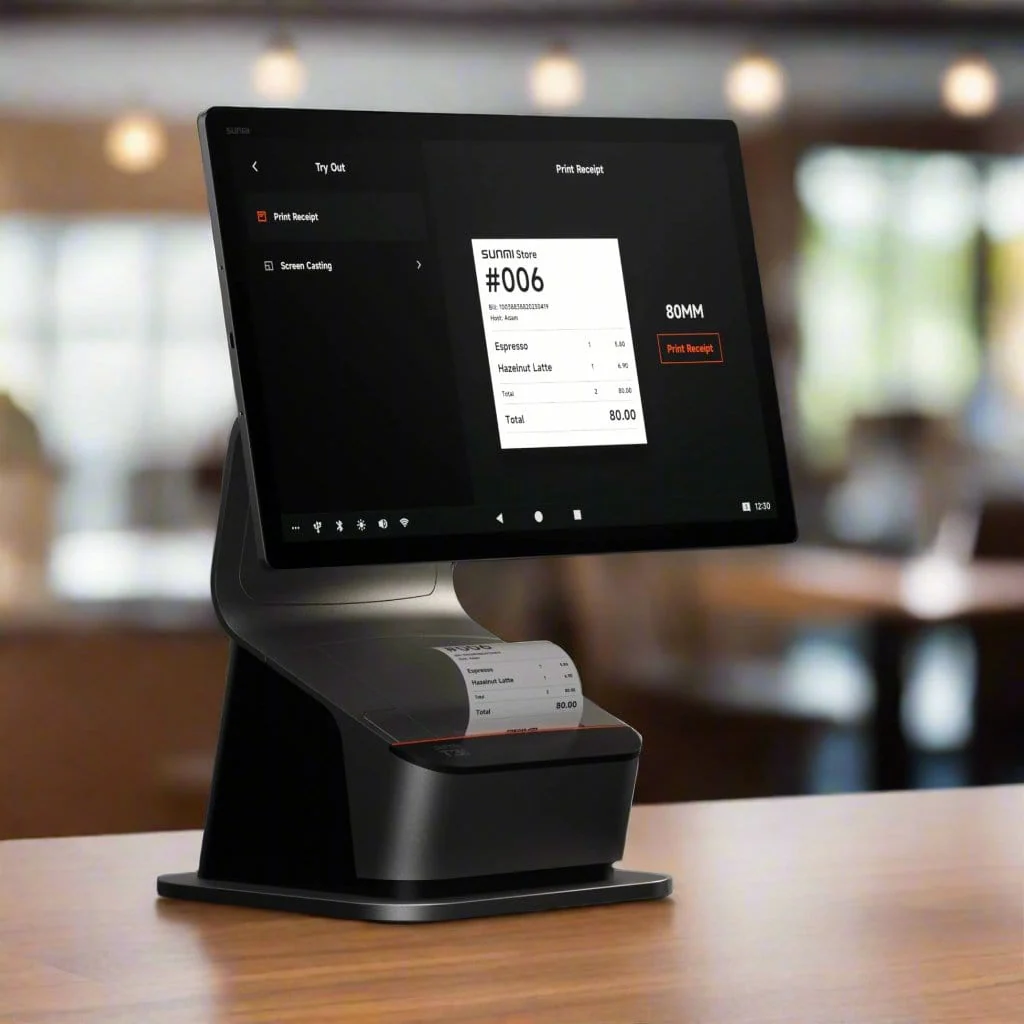
At the center of Smartstore’s POS capabilities is an architecture consistently designed for extensibility and integration. Unlike monolithic cash register systems, Smartstore follows an API-oriented approach that makes it possible to flexibly connect external services and internal logics.
This structure makes it possible not only to map processes, but to actively shape them. Transactions are not viewed in isolation, but are part of a higher-level workflow that may include customer identification, access control, payment processing, and post-processing, for example. The user interface is merely the visible layer of a significantly more complex system.
The FlexPOS concept thus transforms Smartstore into an operational control unit suitable both for simple sales scenarios and for highly individualized processes.
Integration of Physical and Digital Interactions
A key feature of modern POS systems is the ability to seamlessly connect physical and digital interactions. Smartstore supports this through the integration of various technologies such as QR codes, RFID or NFC. This gives rise to hybrid scenarios in which the purchasing process is only one part of a more comprehensive interaction.
In event environments, a POS system can, for example, simultaneously function as access control, payment system, and customer identification point. In retail, self-checkout processes can be implemented that do not require traditional staff. These developments illustrate that the POS must no longer be understood as an endpoint, but as a dynamic hub within a system.
The Role of Fiscalization in the Modern POS
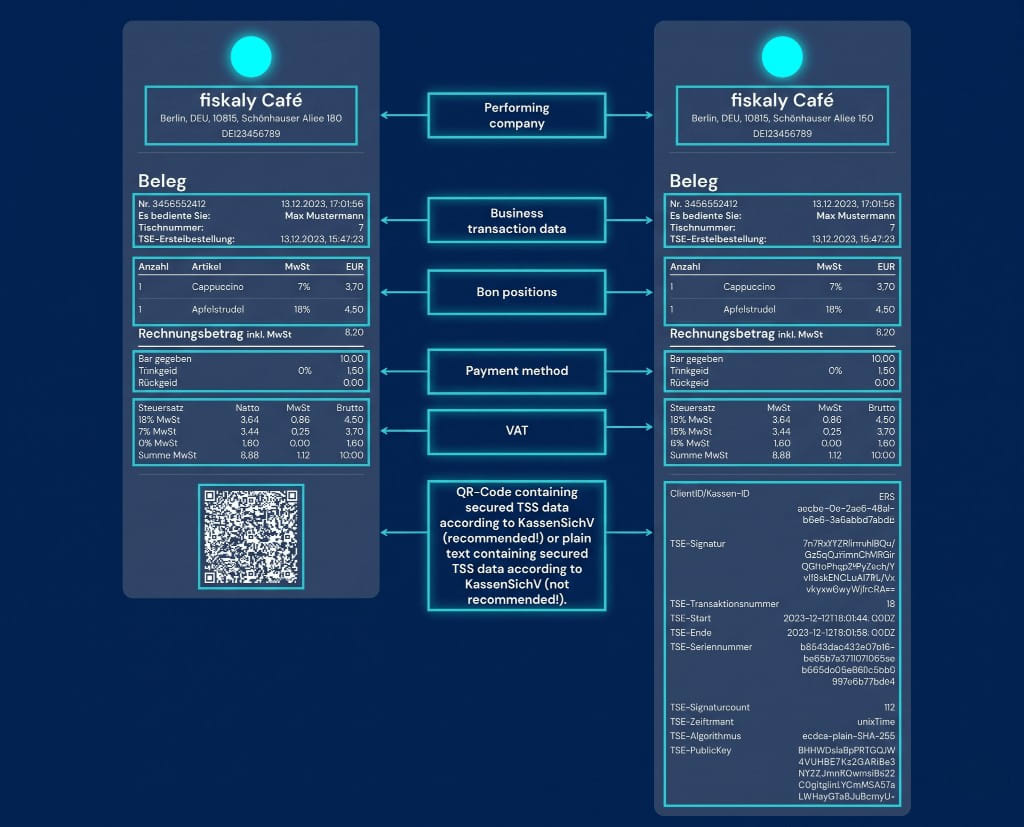
As the digitization of sales processes increases, regulatory requirements are also rising. In Germany, for example, the Cash Register Security Ordinance requires tamper-proof recording of all transactions. This so-called fiscalization ensures that tax-relevant data is recorded completely and traceably.
This is where fiskaly comes into play. As a cloud-based provider, fiskaly provides an API through which transactions can be signed, stored, and archived in an audit-proof manner. The classic hardware TSE is replaced by a flexible cloud solution that can be seamlessly integrated into existing systems.
Smartstore and fiskaly: A Consistent Integration
The connection between Smartstore and fiskaly is not an optional add-on, but a logical extension of the system architecture. While Smartstore represents the operational level of the POS, fiskaly takes over the regulatory safeguarding in the background.
Technically, this is done via direct API integration. As soon as a transaction is triggered in the POS system, it is transmitted to fiskaly, signed there, and then fed back into the system. At the same time, the data is stored in an audit-proof manner and digital receipts are provided.
This coupling means that Smartstore not only functions as a flexible POS platform, but also simultaneously fulfills all legal requirements. The advantage lies in the complete integration: compliance is no longer a downstream process, but rather an integral part of the transaction logic.
Strategic Classification: Smartstore as a Retail Operating System
The combination of Smartstore and fiskaly points to a profound shift in the retail system landscape. In place of isolated stand-alone solutions, an integrated model is emerging that can be understood as a higher-level operating platform.
Smartstore assumes the role of a central orchestrator that brings together different systems and processes. Fiskaly complements this structure with the necessary regulatory security. The result is a system that is complete both operationally and legally.
This development is particularly relevant for companies that operate or wish to scale complex sales environments. The ability to centrally manage processes while simultaneously fulfilling legal requirements in an automated manner is increasingly becoming a decisive competitive advantage.
Conclusion
Smartstore has evolved from a classic e-commerce system into a versatile POS and process platform. With the FlexPOS approach, it becomes clear that modern cash register systems can no longer be viewed in isolation, but function as integral components of comprehensive digital architectures.
Through the integration of fiskaly, this platform is expanded by an essential component: full compliance with regulatory requirements. This creates a solution that is not only functional and flexible, but also meets the increasing legal requirements.
At a time when retail processes are becoming increasingly complex, it becomes clear that the true value of a POS system does not lie in the transaction itself, but in its ability to unite processes, data, and compliance within a consistent architecture.
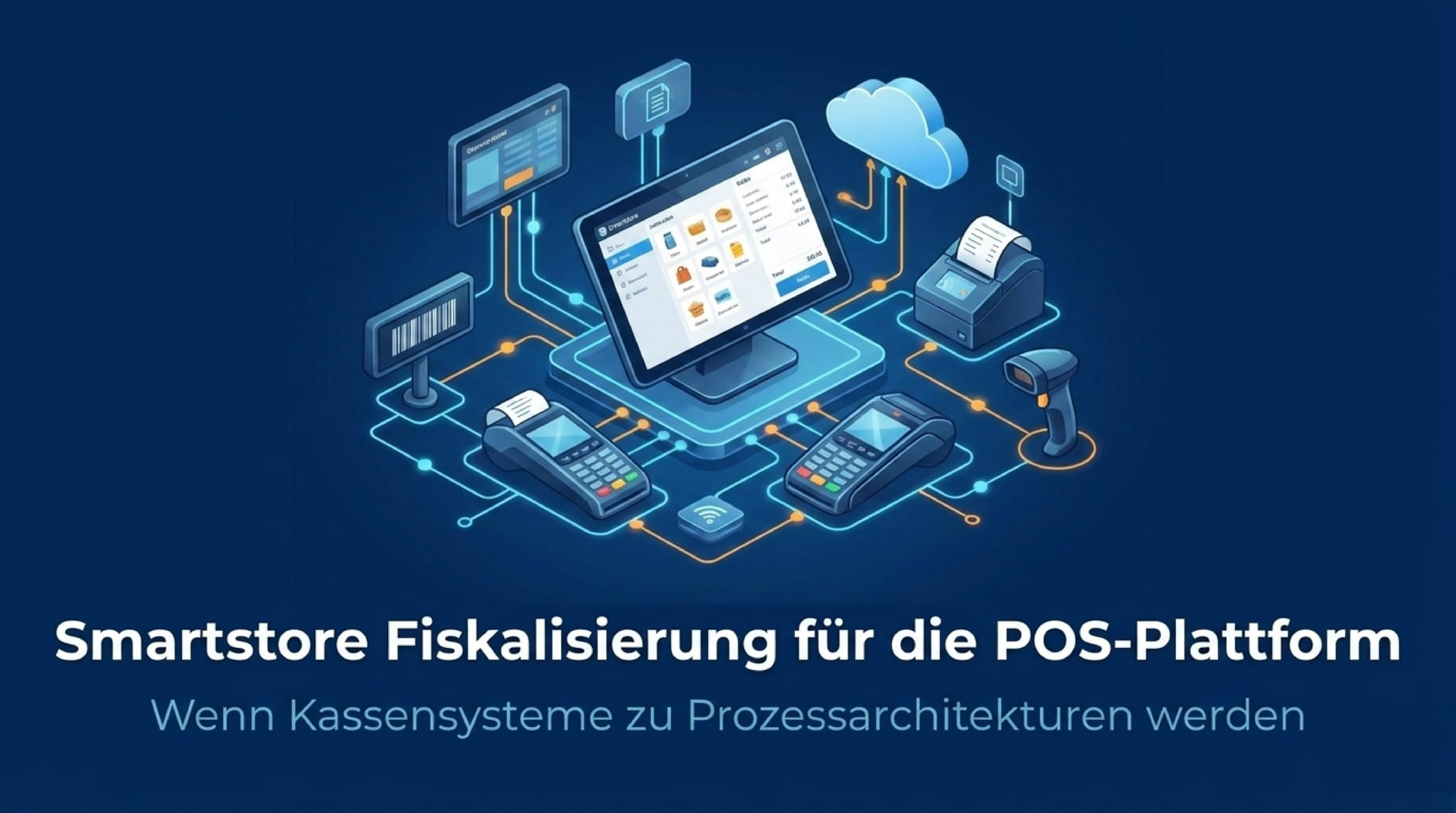
To receive further information, please click on the graphic.
Do you have questions about this topic? Or would you like to send us your feedback? Then you can reach us via the contact form, by email at info@smartstore.com or by phone from Monday to Friday between 10 a.m. and 4 p.m. at +4923153350.