
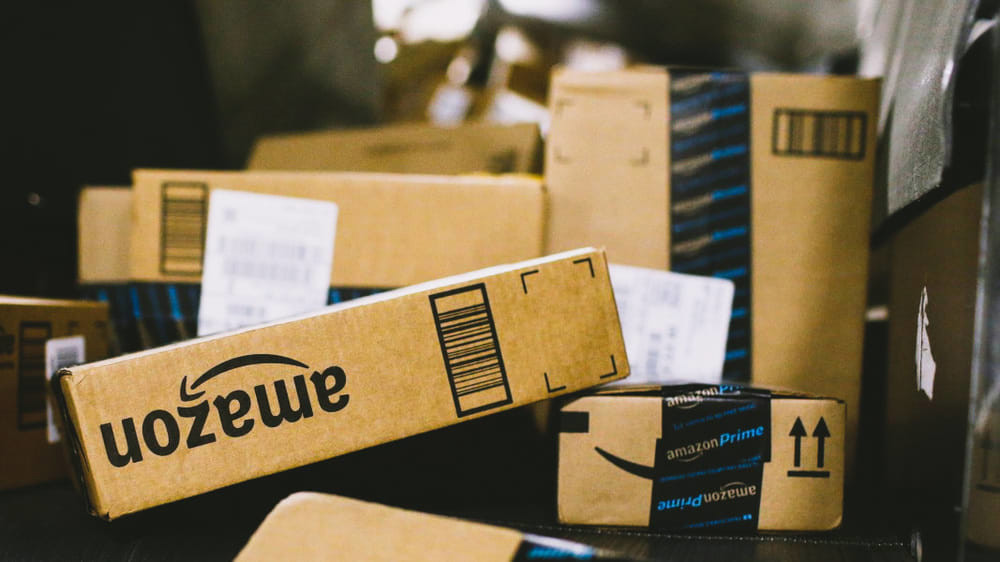
Unfortunately, they cannot be completely avoided in e-commerce. That’s why it’s all the more important for store operators to invest in their returns management.Especially as a little-known retailer, you can give a new customer the feeling that you’re not taking any risks. However, efficient return management is also a bonus for large companies like Amazon. If the return is quick, easy and free of charge for the customer, this can strengthen trust in the company.
But why are returns made in the first place?
So in most cases, it’s not because customers aren’t convinced by an item, but because it doesn’t fit or the color is different. These are the reasons for around 60% of returns. However, these are avoidable. With a precise product description, possibly a size chart and better product photos. Of course, this is especially true in fashion because sizes and cuts are not standardized. Examples include specifications such as loose fit and slim fit, or in the case of colors, navy blue and burgundy.
Ways to reduce returns:
1. DESCRIBE PRODUCTS IN DETAIL
By describing products more precisely, perhaps by including a size chart and better product photos, store operators help themselves and their customers. Of course, this is especially true in fashion because sizes and cuts are not standardized. Examples of this are specifications like loose fit and slim fit or in the case of colors, navy blue and burgundy.
Even though this can become a very long text if you describe all the features in detail, this can help customers to better imagine the product. Various photos of the product here can also help customers get a better overall impression.
2. GOOD CUSTOMER SUPPORT
Good customer support can help answer customers’ most important questions in advance. Of course, this means that online stores have to invest more in support to answer all questions. In the long run, however, this can pay off, as it eliminates the cost of shipping returns. If the customer gets all their questions answered beforehand, chances are higher that they won’t return the product.
3. IDENTIFY REASONS
The returns form is particularly suitable for this purpose. Store operators can use it to find out why the customer is dissatisfied and wants to return the product. New conclusions can then be drawn from these answers and returns management can be further developed and improved in the future.
4. INVEST IN PACKAGING MATERIALS
Products are often returned because they arrive broken or damaged. This causes frustration for the customer and ultimately also for the seller. To prevent possible damage during transport, it helps to pay special attention to the packaging. However, the new packaging law must be observed.(https://smartstore.com/en/packaging-law-tightened-from-1-july-2022-onwards)
5. PRODUCT VIDEOS
In addition to product photos, videos of the products can also help the customer to understand the product better. Maybe the application is not easy and an instruction manual is not always sufficient. Videos can explain exactly how a product works. This is another way to avoid returns.
The effect of a returns management system on different customer groups
Visitors:
A new store, the products inspire and actually nothing stands in the way of a purchase. But before making a hasty purchase, the customer looks at the shipping conditions. This is not just about shipping costs, but also about returns management. How can items be returned? How long does one have? Only when the conditions are right will a purchase even be considered. So uncomplicated returns management also affects the conversion rate and determines whether a visitor becomes a buyer.
First-time buyers:
First-time orders are often test purchases. If everything goes smoothly, from registration and payment processing to possible returns, the likelihood of follow-up orders increases. As a result of the positive experience and the trust gained, customers are more often prepared to make larger purchases.
Regular customers:
In the next step, the trust is finally so great that buyers become regular customers. After all, they assume that everything will work out perfectly and customers don’t have to be afraid of buying something wrong and then being stuck with the costs, because they can be sure that in this case they can easily return the product and get their money back. In this respect, a well-positioned returns management system is of great importance for customer loyalty and customer lifetime value.
Returns according to the German Civil Code Since 2002, the former Distance Selling Act has been directly anchored in the German Civil Code (BGB), namely in §§ 312 ff. Accordingly, the following applies to distance contracts:
“The consumer is entitled to a right of revocation in accordance with § 355 BGB for contracts concluded away from business premises and for distance contracts.”
The Distance Selling Act, which applies to online commerce, grants consumers a right of revocation of 14 days pursuant to Section 312g (1) of the German Civil Code. Within this period, the consumer may revoke the purchase without giving reasons. The consumer must first clearly declare the cancellation (by letter, fax or e-mail) and then return the goods to the retailer. The purchase price will then be refunded to him.
“The consumer shall bear the direct costs of returning the goods if the trader has informed the consumer of this obligation in accordance with Article 246a Section 1 (2) Sentence 1 No. 2 of the Introductory Act to the Civil Code.”
Section 357 (6) of the Civil Code stipulates that the consumer must pay the shipping costs for the return if the entrepreneur has informed him in advance. Even if the goods have lost value, the buyer must pay for this loss. At least if he was informed about it and if the loss in value did not only occur because he checked the goods.
By the way: There are also exceptions in the right of withdrawal. In the case of a custom made for the buyer, if it is a quickly perishable goods or a hygiene seal has been removed, the buyer can not revoke the deal. The exact rules that go and in hand with the law of norms in germany, can be found in § 312g paragraph 2 No. 1 to 13 BGB. § 312g BGB - single standard (gesetze-im-internet.de)
In practice, merchants often nevertheless offer both the assumption of shipping costs and the return of goods for which there is no right of withdrawal. Such a service can strengthen the buyer’s trust and customer loyalty.
Special cases in B2B transactions:
While the respective guidelines apply to transactions between the store operator and consumers, the business partner is considered less worthy of protection in B2B transactions. This results in some advantages for merchants, especially in returns management. This results from the fact that § 312b BGB presupposes a contract between entrepreneur and consumer. Conversely, this means that the right of withdrawal applies to consumers but not to business customers. It is also possible to exclude warranty rights for B2B transactions when drafting the GTCs.
Managing return requests in Smartstore
In Smartstore, you can configure return requests under Configuration > Settings > Order settings > Return settings. You can manage all return requests by navigating to Sales > Return Requests.

Before your customers can return items, the associated order must be marked as Complete. Once the order is set as Complete, customers can click Return Items in their login area in the Order Summary. In addition, they can select how the return should be handled (return action: repair, replacement, gift card).

In the detail view of a return request, you can Accept the return request, edit the details and inform the customer about the status of their return request.

Conclusion: Return management for returns in online retailing
Returns are inevitable even in online retail. So you have to deal with all the legal aspects and the expansion of returns management. As annoying as returns are, good returns management also offers enormous opportunities. Visitors can become first or second-time buyers in the short term, and in turn become regular customers in the long term who won’t want to buy anywhere else because everything runs smoothly. It creates an enormous competitive advantage. In view of the fact that there are now automated and resource-saving solutions for returns, which take a lot of work off your hands, you don’t necessarily have to fear returns either.