
From: Pavlos Tsulfaidis
Date: 24.03.2016
Optimize your customer journey for higher sales
If your B2B marketing is effective, a potential B2B customer searching for a product, clicking on an ad through a Google search or reading your newsletter and/or social media presence will land on your B2B e-commerce site. But as we all know, visiting your landing page doesn't mean a visitor will stay. In fact, according to a recent HubSpot article, 55% of internet users leave a page within 15 seconds.
Of course, such figures are anything but encouraging. To improve them, it's important to understand what attracts visitors to your B2B e-commerce site and what disappoints their expectations. By performing this analysis, you can optimize the customer journey and convert visitors from potential to paying customers.
This will not only keep your potential customers on your site longer, but also convert them into paying customers and potentially return. Here are some tips to get you started.
Capture user behavior
In short, B2B customers visit your website because they expect to be able to solve a problem. These problems often belong to different categories associated with their personality. Therefore, the first step in creating a customer journey is to segment your audience. This allows you to identify the wants, needs and interests of each segment to ensure your website meets or exceeds these expectations.
To obtain the necessary data for segmenting your visitors, online surveys and studies that ask your target audience about goals and expectations can be helpful. After all, no one knows your audience better than the audience itself.
By asking the target audience directly, you not only get honest and accurate information, but also show respect and authenticity. Here are some useful online survey tools that you can easily integrate into your B2B e-commerce site.
Take it a step further by using your visitors' feedback and combining it with data to understand visitor behavior and activity on your site. Google Analytics can help you develop a sense of user behavior by showing where your visitors come from (Google search, ads, email, social media platforms, etc.), what pages they visit and basic demographic information. You can also use heatmap tools to better understand where your B2B customers are scrolling, reading and spending their time.
Create a customer journey map
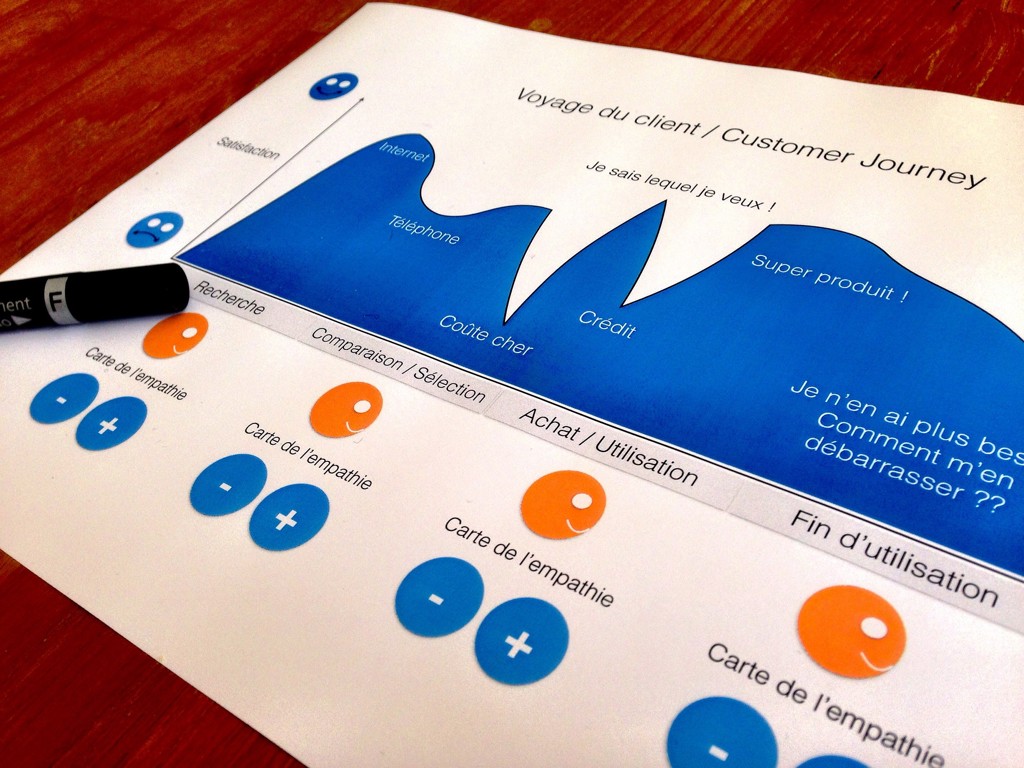
Now that you've gathered information about your visitors' wants, needs and behavior, it's time to move on to the planning phase. Mapping the customer journey gives you a plan for how and in what order your visitors visit your pages - from the landing page to the completion of the purchase in the shopping cart. Of course, the customer journey should be tailored to the preferences of a specific visitor segment.
Pay attention to whether the shopping cart is discarded or abandoned. Over 70% of all transactions are abandoned, which means it's not enough to lead your customers to the source; you want them to actually buy! Use email marketing techniques to target customers who have not completed their shopping cart. It's best to send these customers an email within the next 24 hours and another one a week later.
Your job is to shape the customer journey so that your visitors want to complete the purchase. Sometimes this means adding interactive content like videos into the mix. Other times it may mean changing the flow of the customer journey and adding more images and/or content. Regardless of your choice, if you plan ahead with knowledge of your target audience, you can optimize your B2B e-commerce site.
Tune your B2B e-commerce site accordingly. Measure the success. Repeat the process.
Now it's time to put your plan into action. Create landing pages that target specific user segments. These landing pages will attract users from different channels and direct them to your site.
Configure your B2B e-commerce platform and implement your ideas. Work with a graphic designer who has experience in user experience (UX) to optimize the page layout, images and graphics. About 16% of B2B e-commerce customers use mobile devices, so it's critical to use responsive design so mobile users can easily view and purchase your products without having to adjust the screen. For an optimal customer experience, you should also use your own B2B e-commerce mobile app to provide users with a smooth mobile experience.
Content is king, and this also applies to B2B e-commerce. Publish a blog with informative content that supports your main products and your brand. Include videos, customer reviews, product brochures and other supporting materials. The focus should be on providing your customers with valuable information to help them successfully complete the customer journey. Good content also helps with search engine optimization.
Test the results
After you have published your improved B2B e-commerce site, it is important to measure its success and make continuous adjustments. Encourage visitors to interact and get feedback on how your changes are resonating with them. Review your analytics to ensure that your visitors are now using your website as you expected or ifadjustments need to be made.
There is a lot of talk about customer journeys at the moment as users increasingly expect websites to be 100% tailored to their needs. This increases the pressure on companies. Despite these challenges, creating a B2B e-commerce site that is truly tailored to your customers' needs is an investment you should not neglect. By doing so, you will strengthen the connection between your brand and your customers, leading not only to customer loyalty, but also to the expansion of profitable and long-term business relationships.