
How smart and digital can 24/7 walk-in store concepts be?
Since 2022, unmanned mini-supermarkets, also known as Smart Stores 24/7, have been experiencing a strong upswing. By now, there are seven different models that vary in degrees of digital integration.
This new form of operation allows small supermarkets to be run in locations where the use of staff is not worthwhile. Moreover, the stores provide the option to be open outside the traditional business hours, up to 24/7 operation. According to Prof. Dr. Stephan Rüschen (since 2013 Professor of Food Retail and Study Program Director at DHBW Heilbronn), seven different models are currently offered in the Smart Stores 24/7 category, with their customer journey being continuously developed.
Smart Stores 24/7 are unmanned markets that can be open around the clock due to their design. They exhibit four essential characteristics:
Grab & Go is still in the testing phase. The advanced Grab & Go technology, which is based on computer vision and sensor fusion and was introduced by Amazon in Seattle in 2016, is still in the testing phase in Europe. Various retailers, including Rewe, Aldi, Tesco, and Carrefour, have launched pilot projects, but only the Polish provider Zabka already operates over 60 such stores on a regular basis. Amazon, however, plans to discontinue its Grab & Go stores.
The customer journey has changed significantly in recent years. Initially an app was required, but access to the stores is now also possible via giro or credit card. Due to the high costs, however, a large-scale rollout is not expected in the short term.
Self-Scanning dominates the technology: The majority of Smart Stores 24/7 rely on self-scanning solutions. Customers are already familiar with this technology from brick-and-mortar retail, making the transition to unmanned shopping easier. In countries like Germany, the Czech Republic, and Sweden, there are already many such stores, and operators plan ambitious expansion, especially in rural areas to close supply gaps.
App-based solutions for direct sales: App-based systems are particularly suitable for direct sales as they require low hardware costs. Access to the shop, product scanning, and payment are done entirely within the app. This saves operators from investing in self-scanning technologies and allows selling items without GTIN via self-created QR codes.
RFID-based solutions are on the rise: A practical alternative. The RFID technology, already used in traditional stores by textile retailers such as Decathlon, Uniqlo, and Zara, is also used in some Smart Stores 24/7, especially in the food sector. For butchers, RFID is particularly useful, as it allows the shelf life to be checked and stock managed at the push of a button.
Hybrid and Cross-Channel solutions are gaining importance: The experiences of the last five years with unmanned branch operations have led to the development of hybrid models. Recently, some operators have begun combining manned and unmanned opening hours. This might become a preferred solution in the future to cater to the wish of some customers for personal contact. During service hours, cash is also accepted, which is particularly advantageous in Germany, where cash payment is still relevant. Additionally, customers can access the online shop via QR codes or integrate Click & Collect solutions like at DM.
Robot boxes as an alternative: Unlike previous walk-in solutions, closed robot boxes allow access to the goods via a terminal. The order is picked in the background by robots and provided at a dispensing station. Various providers such as Latebird or VPS Roberta have developed these technologies. These boxes are particularly efficient as theft is excluded.
Vending machine stores: New developments. Vending machine stores have also evolved. These concepts use multiple vending machines to offer a wider range of assortment that goes beyond classic snacks and presents a kind of convenience store offering. Such vending machine stores can be found in both urban and rural areas. Especially smaller businesses and farm shops increasingly rely on this solution.
The introduction of Smart Stores 24/7 comes with some challenges:
So far, Smart Stores 24/7 are mainly found in rural areas. In the future, they could also arise at gas stations, in hotels, business parks, and city centers. Currently, the focus is on food, but technologies could also be used for non-food assortments. Due to the different location requirements, it is assumed that all mentioned technologies have their justification and will establish themselves in the long run.
Smart Stores 24/7 are a rapidly growing niche due to the shortage of skilled workers in retail. In Germany, there are already more than 500 such stores. Even if they will probably remain a niche solution, they represent an important addition to traditional food retail.
In this blog post, we would like to show how our software is already capable of utilizing all possibilities besides those based on computer vision and sensor fusion today.
The following presents a typical scenario for using a self-scanning system.

The unmanned walk-in store concept is experiencing an upswing in Germany. One of the first such stores, "Teo", opened its doors in November 2020 in Fulda. Since then, many similar store concepts have been established across the country. These autonomous stores offer a wide range of products, from snacks and drinks to groceries and other everyday items. This provides a flexible shopping option for a wide variety of customers - whether for those who want to shop quickly before the office, students at the university, commuters on their way home, or residents in residential areas. Their 24/7 availability makes them a modern and convenient solution for the daily needs of many people.
Where smart technologies are used efficiently

The true intelligence behind these innovative retail concepts, however, results from the use of advanced technologies, above all software solutions like Smartstore. Smartstore has transformed the shopping experience by shifting the entire sales space and its contents directly to the user's smartphone. Such technologies make the shopping experience not only more efficient but also more modern and user-friendly.
24/7 walk-in store concepts are far more than just a short-lived trend

The 24/7 walk-in store concepts represent an innovative and future-oriented development in retail and are far more than just a short-lived trend. During regular business hours, for example from Monday to Saturday between 7:00 AM and 8:00 PM, these stores can be operated with a reduced staff, giving customers the option to pay at staffed cash registers. But after these times, the concept enters a new phase: The store becomes unmanned, and all shopping processes are handled automatically. This model offers retailers significant advantages. They can provide an extended service and keep their business open during low customer traffic periods. It is thus a win-win situation that benefits both the customer and the retailer.
Customer Centricity

In today's era, personalization in retail, especially in 24/7 stores, plays a crucial role. It's about considering the individual interests and perspectives of customers and offering them a tailored shopping experience. The beginning of this personalized customer journey is often the customer's account. The primary focus should be on creating a detailed customer profile, particularly concentrating on a mobile-first strategy. A deep understanding of the customer is obtained by collecting information about their behavior and needs. Jeff Bezos's emphasis on wanting to become the most customer-centric company in the world underscores the importance of customer centricity. In this sense, the focus of every company should always be on placing the customer at the center of all considerations and activities.
The Sales Room

The sales room of the future embodies a new, smart way of shopping. In this visionary shopping environment, there are no traditional opening hours anymore. Customers can shop in such a room at any time of the day or night, on any day of the year. The shopping process is simplified by the absence of staff and the ability to select products via a touchscreen or even their own phone. The contactless payment adds extra convenience. The shopping experience is rounded off by additional benefits such as digital credits and attractive voucher promotions, offered to customers in this smart sales room. It is a shopping world that focuses on convenience, speed, and modern technology to optimize the customer experience.
The Online Shop

The online shop of today places great emphasis on various aspects to optimize the customer experience. In terms of product management, the shop offers a multitude of features. These include inventory monitoring, various pricing model options such as tier prices and promotional prices, and interactive content like product videos. Furthermore, sales-driving measures like cross-selling and checkout selling are utilized, and there are special product types such as group products and product bundles. A highlight is also the multi-shop operation, which allows operating multiple shops from a single interface. Regarding payment, the shop offers an impressive range of options. Besides major payment services like Amazon Pay, unzer, PAYONE, and PayPal, over 100 other payment interfaces are supported.
Buying with smart self-service

Buying with smart self-service is revolutionizing the way consumers purchase products. Modern technology allows customers to choose from an impressive range of products. This ranges from staple foods like coffee to more exclusive products like champagne, and from everyday essentials like blister plasters to specialized goods like cuckoo clocks and spirits. This variety appeals to a broad spectrum of customer segments, be it the ecologically conscious buyer, the animal lover, the spontaneous shopper, or the gourmet enthusiast. The target groups are diverse, ranging from travelers and students to price-conscious buyers as well as late risers and morning people. But smart self-service technologies are not limited to retail. They are also used in other areas, like workplace catering, and offer innovative solutions for gas stations. It is clear that these technologies represent the mega trends and success factors for the future of self-service. With their versatility, adaptability, and focus on customer convenience, they show the way for the further development of retail and other industries.
Stocks up to date

The precise monitoring and management of stock in vending machines are possible today through the use of innovative IoT and telemetry solutions. These technologies function as a central management system and create a connection between machines, refrigerators, and operators. Smart IoT plays a particular role. It networks all vending machines, regardless of whether they are positioned at one or multiple locations. For operators, this brings the great advantage of having a clear overview of the current stock levels via their smartphone at any time. They can immediately see which items are out of stock and when the next maintenance appointment for a particular machine is due. These technologies significantly improve the management of machines, allowing operators to proactively and in real-time respond to market needs.
Scan & Go and more

Shopping with the smartphone has been revolutionized, especially through the "Scan & Go" system. Unlike many systems currently available, ours stands out by eliminating the need for a separate native app. Customers don't have to make cumbersome downloads from app stores, reducing effort and increasing acceptance. This concept offers particularly significant advantages for the shop operator. They can forgo complicated and potentially error-prone processes that would otherwise be necessary to connect to the ERP or merchandise management system. This also eliminates the costs associated with developing an additional app. To further optimize the shopping experience, our Smart PWA supports a range of workflows in retail, including "Click & Collect," "Click & Meet," and many other “& Go” options. The goal is to offer customers a versatile and convenient shopping experience.
Smart MDM & Smart CRM
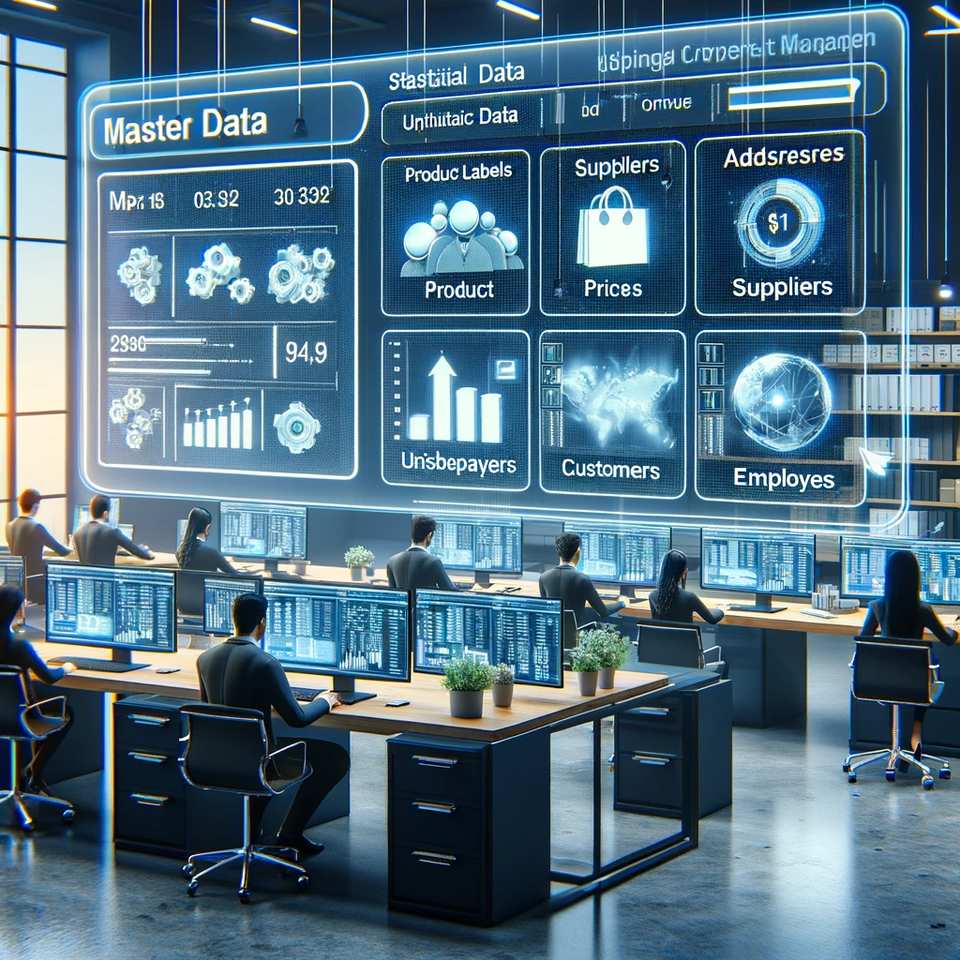
With Smartstore, companies can optimize their business processes through efficient master data management (MDM) and customer data management (CRM). Smartstore's Smart MDM system allows all digital master data to be centrally managed in one application. This has the advantage of increasing efficiency by managing all data in a central repository and seamlessly synchronizing it with ERP or merchandise management systems as needed. On the other hand, Smartstore's Smart CRM module provides a platform for collecting and centralizing all customer data. Features such as profile unification, customer data modeling, real-time personalization, and automation are integrated. With all customer data in one central location, companies can easily and efficiently conduct data personalization, data segmentation, and marketing automation. Together, both systems offer a coherent and effective solution for managing and leveraging business and customer data.
Cash register system for payment acceptance and sales tracking

The cash register system is a comprehensive solution for payment transactions and sales tracking in the retail sector. It is specifically designed to meet the diverse requirements: from customer expectations and employee needs to the legal requirements of financial authorities. Through its versatility and adaptability, it offers seamless integration into the everyday life of retail.
Alternatively, accepting cash is also possible. The Cash-Desk by GeWeTe is a modern payment station for the retail sector that automates the payment process at the checkout. By using technology to process cash payments, the Cash-Desk helps reduce waiting times at the checkout and increase efficiency. It offers the flexibility to be used either as a self-service checkout or with personnel and contributes to enhancing the customer experience. By minimizing cash handling, the Cash-Desk helps create a more hygienic and secure environment in the retail sector.
Digital Touchpoint - interactive information areas for the store

Today, customers are accustomed to obtaining detailed information about products online, including reviews and ensuring that an item meets their requirements. This online experience can now also be replicated in physical stores through integrated digital kiosk systems. These systems allow customers to interactively get informed about products in the store. Additionally, they can even get online advice from a personal consultant right on site. This offers regional retailers the opportunity to present complementary products. If a customer does not find a product in the store, they can order it directly to their home thanks to this system. This approach provides a seamless connection between traditional shopping in physical stores and modern online shopping by intelligently linking both experiences.
Advantages of Grab & Go and Scan & Go technology with Smart Checkout

The Smart Checkout technology offers two outstanding features: Scan & Go and Grab & Go. With these functions, customers can shop in an unmanned store by scanning products with their smartphone or by placing them on marked areas. This allows for a completely hands-free shopping experience, without camera tracking, and registered customers can leave the store without paying at the checkout. Another advantage of Smart Checkout is the significant improvement of the customer experience. The technology significantly shortens the shopping time and offers multiple payment options. Customers can shop at their own pace and pay according to their preferences. Additionally, digital receipts are offered, ending the annoyance of paper receipts.
Cloud platform: More satisfied store customers thanks to IoT sensor technology

IoT sensors and cloud platforms prove to be key components for increasing customer satisfaction in branch stores. The challenges that empty vending machines or defrosted frozen products pose for customers can be successfully addressed with these technologies. The solution is to attach IoT sensors to various devices in the store, including doors, vending machines, frozen machines, refrigerators, shelves, cash registers, and other relevant facilities. These sensors are specialized in continuously monitoring the state of these devices. When pre-defined thresholds for certain parameters, such as temperature or stock level, are under- or over-shot, the sensors transmit this information to a managed IoT cloud platform.
Selling age-restricted products 18+

To ensure that minors do not take products from the sales space that are intended for adults only, a biometric solution offers itself. It allows for the secure sale of products like alcohol and tobacco for those aged 18 and over. We present four implementation possibilities: First, the technology can be integrated into vending machines or self-service checkouts to regulate the sale of age-restricted products. Second, facial recognition for access control to the store can be used to deny entry to persons under 18 years. Third, anonymous age estimation allows the sale of age-restricted products. A photo ID is held in front of a camera, and the AI decides whether the item can be sold. Fourth, there is the option to store personal photos in advance (while complying with data protection regulations) to enable the release of goods, whether at machines or in personal sales. This technology can also be used to control doors. These biometric solutions offer an effective way to regulate the sale of age-restricted products and ensure that only adult customers have access to these products.
*Using self-scanning (Scan & Go) with your smartphone

Our Smart PWA is designed to deliver all functions necessary to optimize the shopping experience of customers in a 24/7 store. Since the entire assortment is represented as an online shop, products can be scanned with the phone's camera and placed in the digital shopping cart. The purchase can be completed either online or via QR code using the stored payment data. Alternatively, a cashless and immediate payment at a payment terminal using a debit or credit card is possible.
https://smartstore.com/en/smartphone-scanning-for-better-retail-business-results/
Conclusion
The introduction of autonomous supermarkets and 24/7 Smart Stores marks the beginning of a new era in retail. In a world where technology and innovation are at the forefront, these concepts offer customers an unparalleled shopping experience and set new standards for the retail of the future. The advances in this area will undoubtedly contribute to making shopping more convenient, efficient, and exciting, and retailers will continue to strive to exceed their customers' expectations. The future of shopping promises an exciting journey through the world of technology and convenience.
Do you have more questions about the 24/7 Smartstore concept? Call us or send us an email. Our Smartstore team is happy to assist you personally!
Contact:
Email: info@smartstore.com
Phone: +4923153350
SmartStore AG
Kaiserstraße 63-65
44135 Dortmund